
Two Marks after the Clearing
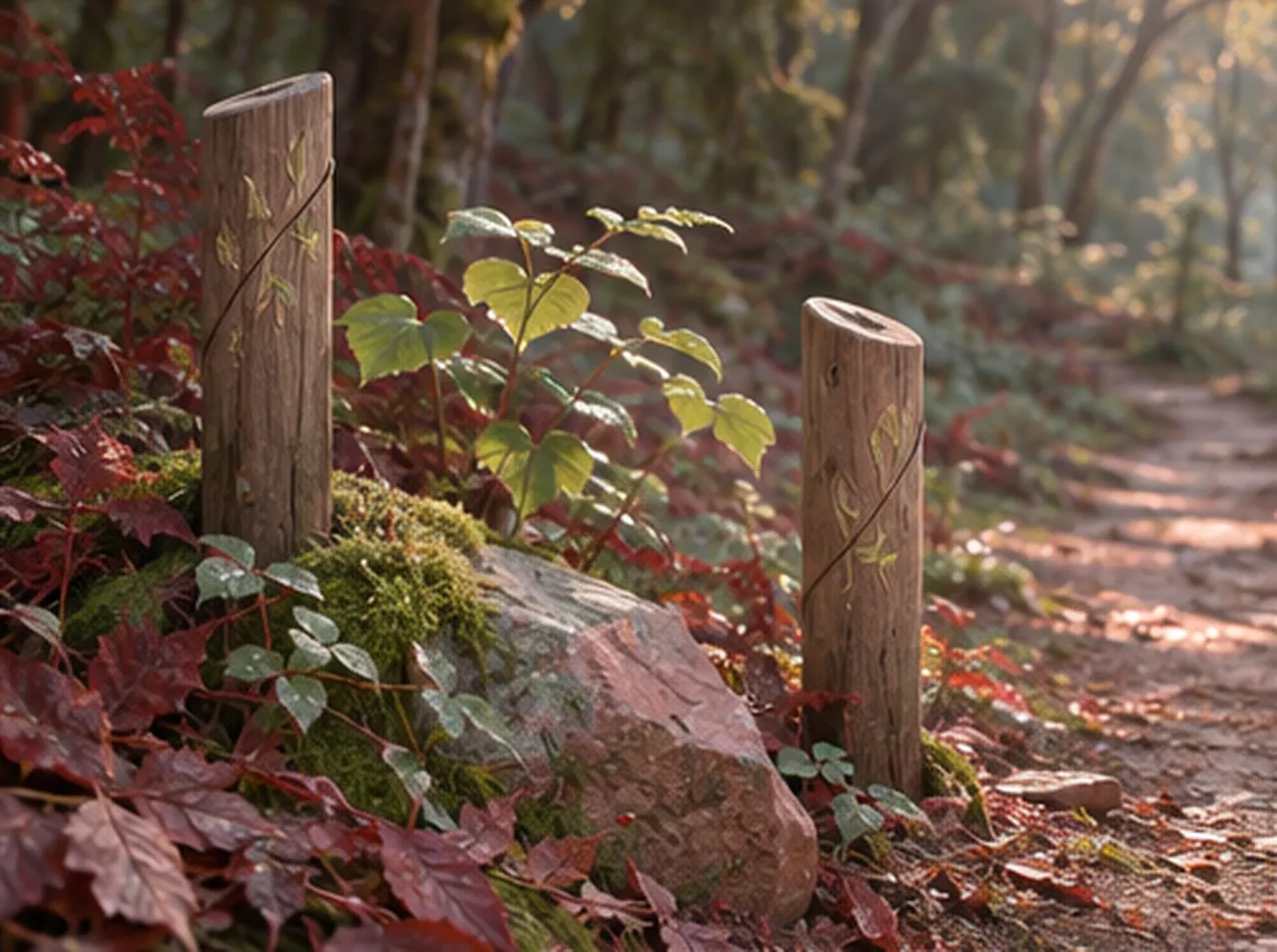
After the guardian has made a first pass around the damaged patch, the opening looks lighter. A shallow mark in the old soil and a little sign set toward the exit are visible in the same scene. The earlier drawing treated them as interchangeable signs of a finished route. One has a different job. It records where the dark patch used to reach. The sign toward the exit makes sense only after the wider path has actually been checked from both directions.
Leave the mark that remembers the earlier ground
A bent stick beside the first fern once helped the guardian locate a dull place in the grass. It can remain familiar while the edge moves or dries. In Read the Rim of the Dark Patch a dry leaf is another reference to that first observation. A short note beside the photograph of this spot can place it in time, including the reason the guardian did not walk through the area. The mark can keep evidence of work without announcing a whole usable route. A visitor returning just to see that patch should be able to stop there.
Put the route mark where a second view is possible
The far sign goes where a turn opens onto a broad strip of clover. Its top is flat enough to distinguish it from the old bent stick in weak light. Set it back a short way so a guardian can stand without crowding an animal at the turn. After inspecting the exit, look back and make sure the return cannot be confused with the old edge by the fern. The Return Trail has a second walk for checking where an alternate route reconnects. A deliberate position for the new sign can make it harder to read the route as ready just from its first opening.
Make each observation available in the record
A list of completed actions can put ‘edge found’ and ‘return checked’ on two separate lines. The first line can point to a drawing of the bent stick. The second names both ends of the glade crossing. If only one is present, the tracker can state which observation is still needed. An early prototype might allow an unclear route to stay open for written review. It can use a detail about the new marker to avoid asking the guardian to repeat the work at the old dark patch. A Gap in the Return Loop shows which old lines may still be worth carrying after a new connection is possible.
Keep the signs legible during quiet travel
We put the older reference close enough to a wood edge to show its shape. The new marker sits farther away from the path and receives a broad glancing light. Light can preserve each outline in a small image without placing two large signs in the middle of a level. Natural material needs to stay readable enough for people who see only part of the green or red palette. The pieces can still belong together visually while being easy to distinguish by cut and position.
Try a case where one mark must wait
Ask a guardian to check a glade whose near edge is clear but whose far exit remains uncertain. They can locate the old reference and leave a note before moving on. Let them return without seeing the new marker in position. The record should help them continue at the far bend without looking for another dark patch. After they find and verify a return, the second sign can take its place. A short status becomes useful because it says which part of the work happened and which piece of ground the guardian can still show to someone else.