
The Return Trail
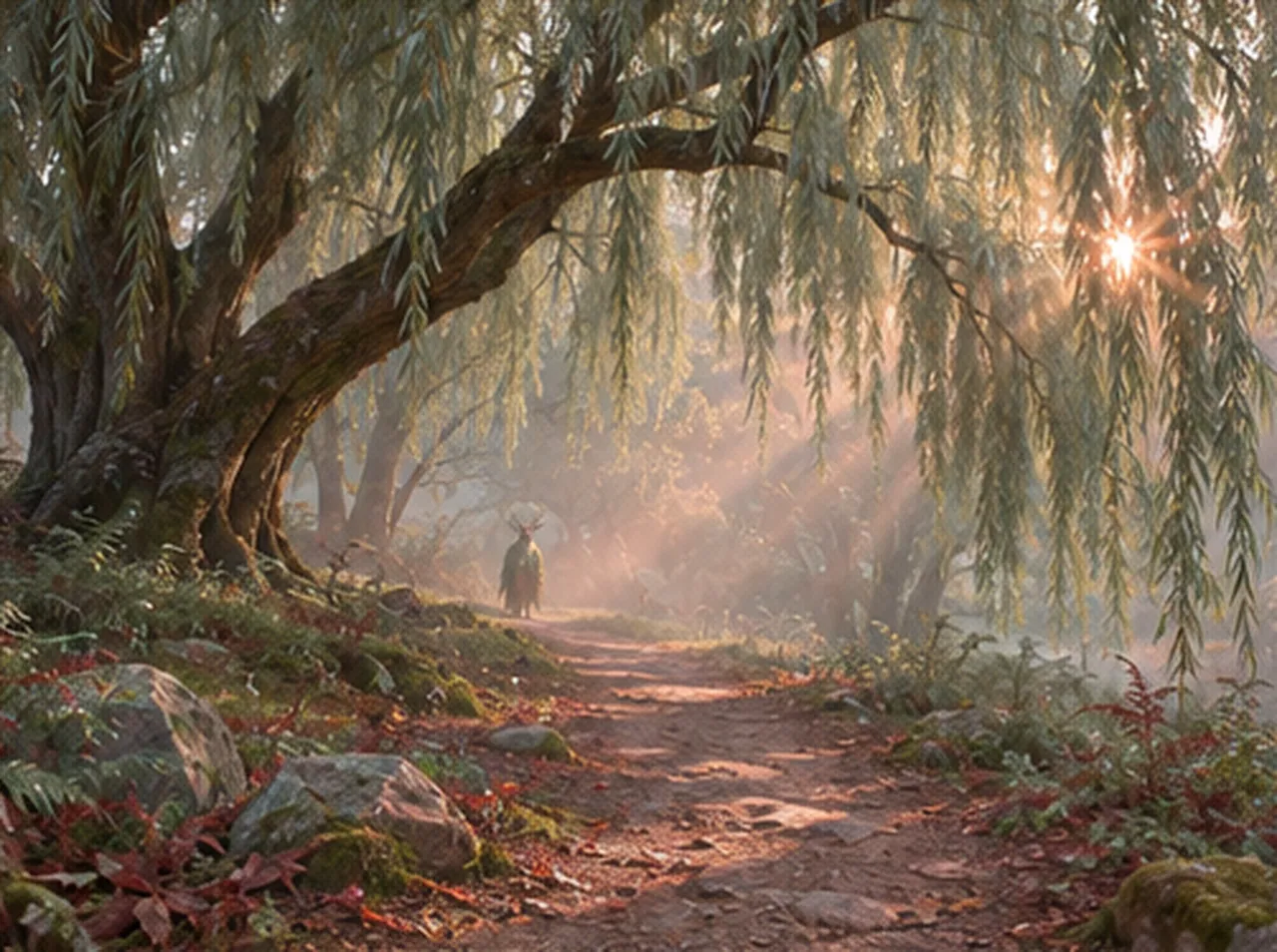
Yesterday the herd crossed a willow bend and returned to the glade by a branch of the old track. This morning a low log crosses one of its turns. The guardian can walk beside the log but the wider route for a group is interrupted. The Return Trail is a concept for making a complete loop visible again without guiding the herd into a run of narrow paths that just happen to look open from the first step. Two older hoofprints help define where to begin.
Keep an arrival view of the old way
From the willow, the ground rises a little before curving around the log. One hoofprint remains in the soft inside edge. A partly covered print farther up points away from the most obvious scramble over the wood. The player can place a small scratch or drawing in the field record by each visible turn. This holds the old course as a comparison even if none of it is usable after a given bend. A Gap in the Return Loop looks at which part of that interrupted line can still give the player a valid route direction.
Walk enough of a detour to verify both ends
The smaller detour goes downward toward a set of pale willow roots. From the outer end of the curve the player can see lantern light in the first glade. That confirms its direction but says little about whether the widest part will be available all the way there. The guardian should be able to continue quietly past the two roots and see the return opening from ground level. A test near the next clearing can compare the new sightline to the angle of the farther hoofprint. A player who needs to find a different route can preserve both observations and choose a starting point back on the wide willow bank.
Give the animals a place to wait without being seen
A tall stand of ferns fills one side of the turnaround. Put a narrow keeper path behind it that returns to a small overlook. The player can get a view of the widest part without standing in the herd’s opening. Room for the Herd to Pass follows how a pair of visible edges under the ferns can help distinguish a path from a waiting area. The first wider shape beyond the log can become a place to wait instead of part of the route. Its purpose is to leave a comfortable gap if the group needs to follow the bend at different speeds.
Separate the old and new route materials
The old side includes small rock and red packed soil. Fresh damp grass stays greener along the willow. Long gray light gives a shadow to the log crossing and keeps the nearest hoofprint readable by edge. Ferns and brush can divide the areas without creating a hard artificial border. A hand-carved marker can face the guardian’s view without appearing in the herd’s quiet route.
Test an entire exit and return
The current prototype plan needs one interrupted curve and two possible returns. Ask a player to use the far view of the glade and an older hoofprint to explain which option can carry the whole loop. A retreat after a partial check is useful if it shows what point could not be confirmed in time. The guardian should leave one reliable path or a clear reason to wait.