
A Gap in the Return Loop
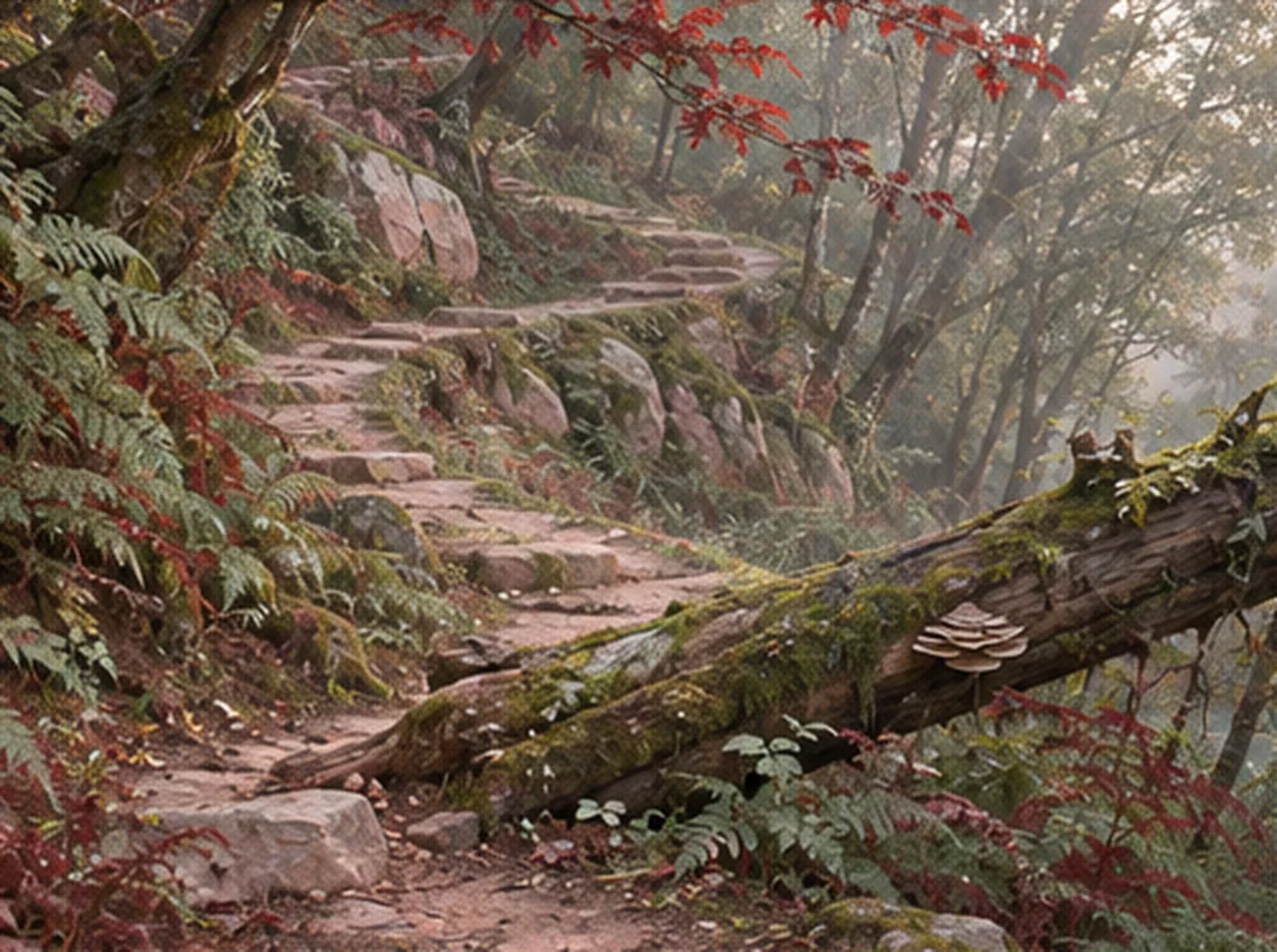
The return loop in this sketch keeps two stretches of old hoofprints. Between them a recent log crosses the only opening wide enough for an entire herd. From a low position near the log, it looks possible to climb onto the old route and keep going without any wider change. That first view can hide the rest of the group problem. We laid out a smaller practice scene in which a guardian can draw a partial route and walk far enough around a bend to see whether it still connects.
Keep the far set of tracks in a usable place
A shallow print above the log is visible through a gap beneath a branch. It continues the direction of the older line. The guardian can read it without crossing the obstacle. Put it in the sketch and note the place from which it can be seen. The Return Trail asks the player to recover a loop without pretending the old sequence has simply become open again. Looking across the gap shows where the route used to come back. It leaves a clear picture to test a new connection from the side of the willow.
Check the forest floor beyond the first turn
The most direct detour passes a rock to the right of the log. At its far side the land falls away and leaves a much narrower path than the first view promised. A second path below the willow runs farther from the old line. After its first turn it meets a low dry shoulder where the guardian can see the next opening. Both approaches can be tested from an ordinary walk. Leave time to retrace the shorter one and reconsider which part of the rock seemed like an inviting edge. A bad route should be possible to understand at the scale of the person who tried it.
Mark where the lower route rejoins
The lowest part of the new route reaches a sheltered opening near a place the herd used before. Ask the player to check a second exit from there before drawing the route as complete. The position of a small old print could connect the dry shoulder to the later glade. A shiny new puddle might suggest the path goes wider than it actually does. Room for the Herd to Pass looks at a related narrowing of the choice when a person can see farther into the trees than the passage itself allows. Put the new mark at a point where the next place to stand is readable.
Show space a guardian may need to give back
A walker can keep the map open from the dry shoulder and see where the animals would turn. That is enough to choose a place to step aside. Let them keep one note about the log even when the lower loop is available. The old gap tells somebody why a particular new direction was checked. There might still be light along the broken route and a reason to go back there as a guardian. An open path for one traveler is a different kind of state from a usable group crossing.
Finish with a route someone can read backward
Give the next reviewer the two checked ends and ask them to return from the far one. If they can point out both the log and the standing space under the willow, the new loop has a relationship to the original. The group path can remain quiet during that test. Two Marks after the Clearing follows how the field record might preserve those different observations when the ground itself has moved on. The new loop is ready to compare once its usable return does not depend on a lucky choice at the first bend.