
Room for the Herd to Pass
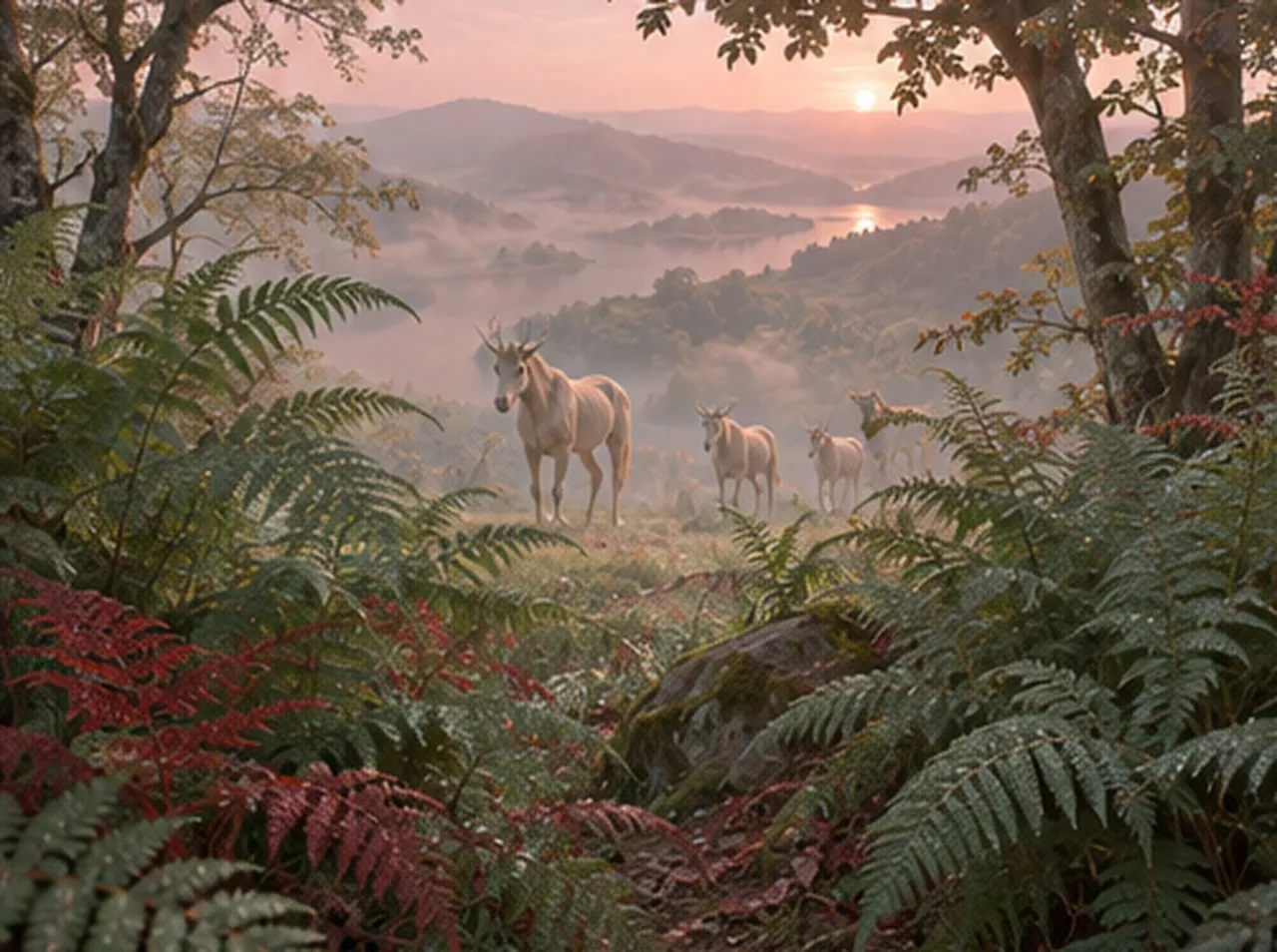
The guardian sees two figures through the mist and expects the rest of the herd to follow the first. The glade has a narrow approach that the guardian can walk with ease. Seen from below, its last turn passes very close to a clump of stiff ferns and briefly hides the wider lane beyond it. We wanted a way to inspect both parts without forcing a close encounter. The first layout gives the guardian an overlook and a return path outside the opening the animals use.
Read the wide area before walking the narrow one
Stand behind the ferns where two bright trunks are in view. Their distance seems small at first, but the ground between them extends almost to the foot of the overlooking bank. Give the player an ordinary width, such as the old hoofprints on one side, to compare before approaching. The quieter upper view lets them see that the herd can pause there before following the turn. The two bright trunks describe the edges of a broad place. They can be held in the field record while the guardian walks to the far side and checks its connection to the glade.
Use a person-sized path outside the opening
The guardian has a path that crosses the uphill side of the ferns. It can get them to an overlook where they do not need to stand in the group’s way. From there a close look at the narrowest opening gives a reason to move a nearby marker to a drier spot. Clear the Narrow Glade uses that view to keep a route away from the edge of the dark patch. The person needs enough space to check the area from behind a plant rather than appear there every time the herd starts moving. The step away also makes the shape of the glade easier to read.
Leave room to pause within the turn
At one end of the curve a shallow hollow is the only clear place to stop. The animals at the back should be able to remain out of the narrowest area as the earlier group continues. We left a soft edge near the older tracks so there is a pause even if a leaf moves during the crossing. A Gap in the Return Loop considers what happens if the next section is blocked entirely. Here both ends can remain open if the room between the ferns and the tree is not used as a place for a guardian to wait.
Keep the scale ordinary in the art
The scene needs enough mist that we see the herd through plant edges before the rest of its shape takes form. Footprints can be specific without making them all identical. A taller plant can read as a familiar height from the ground and a small vertical detail from the overlook. When the hillside turns, the visible width between two trunks should stay part of the frame. A player looking at the static page can use that width to understand the same choice the prototype gives a moving camera.
Explain the room from a second place
Ask a reviewer to identify where they would pause before an animal approached. If they choose the patch of ground that they just opened for the herd, offer the path behind the ferns and let them look again. The Return Trail leaves a similar side space while following the lower willow route. It does not make a quiet path into an occupied space just because the guardian can use it. A successful room keeps its difference between the place somebody checks and the place the herd needs when it reaches the bend.